BLOGS Click to 2020
2015 2014 2013 and DC Blog 2012 2011 2010 2009 2008

BLOGS Click to 2020
2015 2014 2013 and DC Blog 2012 2011 2010 2009 2008
BLOGS Click to 2020


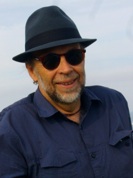



CHINA
I’m thinking about China. My first work out of Australia was in Papua New Guinea, then Indonesia, and a short visit to Hong Kong, China. Though my career work centred around East and Southeast Asia I manage many visits to China. (19/11/23)
THE VOICE 5
It is over. A new pathway is needed. I feared, of course, that The Voice would not win. Support for The Voice had improved. But those who lacked interest in Aboriginal affairs and others who have taken on false information have impact on the results. It was a sad day. (15/10/23)
THE VOICE 4
I have voted early at the Ultimo TAFE. Many people there to help but I was the only person there to vote. I rote YES, handed it in and worked away. I walked to the Powerhouse, bought a coffee and munched on a bun and thought about what had happened in Ultimo. I fear, of course, that The Voice would not win. Support for The Voice has improved, but those who lack interest and others who have taken on false information are having an impact. Nevertheless I am not yet ready to be sure that The Voice will not win. (4/10/23)
THE VOICE 3
Shrinking level of support by the community for the Voice is surprising. I have followed the development of the Voice group and the many in aboriginal communities. But I am concerned by the negativity of many non-aboriginals and some aboriginals. I can understand that there are diversity in outlook by many people in Australia. What concerns me is that the criticism is often spread wide and that much information is partly inaccurate or just wrong. Reporting by The Voice provided the basis for the Government to find out the views of the people. If the community does not support The Voice it may be a long time before the situation of Aboriginal and Torres Strait Islanders can be improved. It is important to help build better homes and create more jobs for their respective communities. (29/9/23)
THE VOICE 2
It is a dangerous time for the Australian Government and its people, particularly Aboriginals and Torres Strait Islanders. Support for The Voice, the emotional core of the aboriginal demand, is dropping in several polls. As if we could just dump it and start all over again!
But that wont happen. If it is not accepted now we will not get another opportunity for a long, long time. A decade or many decades. That is politics. We must go forward and recognise The Voice and we must add and include Aboriginal and Torres Strait Islanders to the Constitution.
The Voice and the Constitution are at the core of the changes. If we go backwood now we will continue to stagnate for a long. We will continue to be a nation that cannot come to terms with the rightful needs of its residents especially the Aboriginal and Torres Strait Islanders. The Australian flag and the Aboriginal flag both now are always flying on the Sydney Harbour Bridge.
It is equally right that the Aboriginal and Torres Strait Islanders people should be treated with the same rights and be recognised as the first residents in Australia and the Torres Strait. (24/6/23)
RECOGNISE, LISTEN AND ACT 1
Now is the time to act. To make clear the connection between all the Aboriginal communities and the Torres Strait communities and the rest of the Australian community. The Ularu Statement from the Heart made clear the need and importance of doing this now.
Prime Minister Anthony Albanese and his government has strongly supported many in Aboriginal communities and the Torres Strait Island communities. He and his supporters believe in the need for us to Recognise, Listening, and Act. The Voice will enables the Aboriginal and Torres Strait Island communities to pass on their views to government. It is a pathway forward with an agenda that all Australians should recognise is fare to all of us.
It is unfortunate that Liberal Party leader Peter Dutton has made it clear that he and his party will not support the government. This is a major loss for Dutton and his supporters. He seems unable to grasp the need of the Aboriginal communities and the Torres Strait. The Liberals may will have weakened their chances of getting back to power.
This is an action that should have been dealt with many years ago. We must not let it be stopped again. Australians are better than that. (5/6/23)
MUSIC OF MY ERA
Tina Turner was a fabulous singer. RIP.
So also was Leonard Cohan, who I first heard about in the 1970s. I managed to attend a few of his consents on his visit to Australia. And with M we met Cohen in Ireland. He and us got into the same lift in our Hotel in Dublin and he and M chatted as I watched in amazement. Once again: RIP. (27/5/23)
THE AUSTRALIAN NATIONAL MARITIME MUSEUM
MU SEA UM is short for the Australian National Maritime Museum. It has a great location in the centre of the city and Pyrmont, and a short walk from my apartment. It has a substantial building full of maritime stuff, close to cafes and and surrounded by a large number of small to very large ships.
The barque James Craig was built in Sunderland in 1874. I heard the music of a bagpipe as the James Craig headed to the doc in Darling Harbour. You can have a look-round the James Craig, or go on a ocean jaunt in the waters off Sydney. I am temped to sale on the James Craig and would love again to hear the Bagpipe as the James Craig comes into the dock.
Surfing is, unfortunately, a small section of the museum. Board surfing was first brought to Australia by Duke Kahanamoku in 1914. Surfing had a big boost 1964 when the first world championship was held on Sydney’s Manly Beach. The winner was an Australian, Bernard ‘Midget’ Farrelliy.
The MU SEA UM is large, growing number of maritime ships and boats and numerous other maritime matters and things. (14/4/23)
THE POWERHOUSE MUSEUM
A significant part of the Powerhouse has been moved from Pyrmont in Sydney’ inner west to Parramatta in the western suburbs of the city. The current building is well down the track with workers getting some vacant spacers updated. The move to Parramatta is good for the western suburbs and will overall enables more space for Powerhouse stuff, and that is good.
I have had manny visits to the Powerhouse over the last eight years so I am curiously looking at the changing face of the Powerhouse. It still has airplanes, trains, vans and motors bikes, trains and various gadgets both old and new and stuff. But most significant is the changing look and feel of the Powerhouse. For example, the much more importance given to music, clothing design and the vibrant colours of the Sydney Pride.
There are many things I like about the evolving look Powerhouse. The redesign of the three levels of the building, and a clearer walkways between the levels. The extensive use of film. Staff who wonder around are are helpful and willing to listen. The unpretentious lunch cafe inside and outside the biding.
Negatives? Too much of the space is almost totally in black. Film needs black, of course, but too much black can make the visit a little too gruesome.
The Powerhouse is a major branch of the Museum of Applied Arts and Sciences. (23/3/23)
THE WEBSITE KNOWN AS WALKING NOT RUNNING
The Website Dean Forbes Walking Not Running was launched on the 3rd of April, 2008. I was a Professor at Flinders University and it was my way of communicating across research, teaching and administration. I enjoyed creating the website and found it helped to keep me aware of the activities in the university and the community.
Googol provided a monthly report on activity. Between 2013 and 2021 the user on Users and Sessions were:
2013 42+13 >> 2014 34+21 >> 2015 64+19 >> 2016 59+48 >> 2017 77+32 << 2018 30+15 >> 2019 22+50 >> 2020 28+53 >> 2021 14+34.
This is a one month within a year report. To get the full results of this multiply the number by 12 to get a full estimate. The result for 2021 would be 12 x 24 = 288 Users and 12 x 34 = 408 Sessions. A total of 699 in a year. Not huge numbers, but this is academic. As a result I am considering another year and will make the decision this week. (4/3/23)
MUSEUM OF CONTEMPORARY ART
The MCA is located close to Sydney Harbour and is close to large ocean ships and many harbour ferries. The Rocks area with its numerous food cafes and coffee shops. Interesting work places are also a bonuses. A great location for an art museum and far enough away from the larger and competitive Art Museum of NSW.
The substantial exhibition by South Korean Do Ho Sun will finish on the 26th of February. It is good that the MCA has high profile international artists. A large part of the remaining art is connected with Aboriginal art of what I think are of high quality. It seemed to me that there is, apart from aboriginal artwork, very little local and other Australian art at the present time.
From my humble thoughts while sitting in the shade by the Harbour my thinking is that three clusters of the MCA should be Australian Aboriginal, local Australian art and East and Southeast Asian art. With a once in a while change of something totally different.
The MCA Cafe has an inside and outdoor space overlooking Sydney Harbour from the forth floor. It is a very pleasant place to eat or drink coffee, though it can be full at times.
The substantial growth of the Art Gallery of New South Wales makes the MCA look small, so its ongoing success will depend on the quality and ability to attract. Membership at the MCA starts at $50. (14/2/23)
THE ART GALLERY OF NEW SOUTH WALES
By building and opening a second major gallery space right next to the long standing gallery has transformed the look and feel of the two combined buildings. Note that from both buildings the levels go downwards. As is -1, -2, -3 and -4.
The original South Building is re-organised and brought up to dated.
>> Ground. The Ground Level is Grand Courts 20th Century, and Asian Lantern.
>> Level -1 is 20th Century Galleries, Centenary Auditorium and Asian Lantern.
>> Level -2 is From Here, for Now, along with Study room and the Daniel Boyd Treasure Island.
>> Level -3 A favourite of mine is the Members Lounge. It is elegant and much larger than the previous hovel. The walls have a handful of large paintings and the food and service is very goof.
The new North Building.
>> Ground. Yiribana Gallery. View Terrace
>> Level -1 Making Worlds. Learning Studio
>> Level - 2 Dreamhome: Stories of Hart and Shelter. Quali Atrium. Outlaw. Media Lab. Meers Hall.
>> Level - 4 The Tank. Adrian ViIIar Rojas. The End of Imagination.
(There is no -3)
It will take time, imagination and hard work go get the best out of the new Gallery. Much of the work has been there for years. But there is also new available, such as aboriginal art work, that is new, and other art that has been hidden away for the lack of space.
When I next amble into the Members Lounge for early coffee and a slow brunch I will be trying to work out my five favourite objects. (11/2/23)
ARTS AND GALLERIES
I always had a mild interest in art and art museums, although I have very few art skills. My brother does, and has always been actively interested in drawing and art. My interest in modern art rocketed about 14 years when I met my partner, a talented artist. We both have been members of the Art Gallery of New South Wales and have visited it on many occasions.
Over the years my favourite galleries have been the New South Wales and the Victorian galleries, followed by the National Gallery and the Adelaide gallery. Yes. I was born in Adelaide so I have a bias. I also have lived in Victoria as a student and lecturer at Monash University and in Canberra where I spent many years at the Australian National University, followed by a return to Flinders University in Adelaide.
The opening of the new North Building of New South Wales Gallery with its Yiribana Gallery, Dreamhome and Making Worlds Collection has encouraged me to spend more time visiting not just the Art Gallery of New South Wales, but as many other galleries I can get to. (8/2/23)
RAIN AND COVID-19
Rain, water and flooding rivers, plains and parts of towns and cities. The most unusual weather in two hundred years. And along with it all are three years, and now entering a fourth year, of COVID-19. Such an extraordinary three years, and, unfortunately, there is more to come. (7/2/23)
VALE GERARD WARD
I was informed of the death of Gerard (Gerry) Ward. He was a geographer and head of the Department of Human Geography and later head of the Research School of Pacific Studies at the Australian National University. He was an expert on the Pacific Islands. He was calm and perceptive and I was fortunate that he guided me as I was taking on a new administrative roles in the Research School. Vale Gerry Ward. (17/1/23)
VALE HAROLD BROOKFIELD
I have belatedly come to hear of the passing of Harold Brookfield. He was born in September 1926 and passed on the 29th of May, 2022. He was a highly regarded geographer and expert on the south pacific and its cultures and economy. He had many years in the Australian National University’s Research School of Pacific Studies. (16/1/23)
2023: SO WHAT IS NEXT?
The Blog for 2023 may follow on from the 2022 content, for reasons I will soon explain. If it does it will have a smaller focus on COVID-19 and more emphasis on other matters. But before I decide I want to think about it.
On the 3rd of April 2008 I launched this website with the name of Walking, Not Running, Urbanista Explores the Knowledge Economy. The website will soon complete 25 years, prompting me to make a decision. Should I continue or should finis it. Bit by bit I am thinking it thru, step by step... (1/1/23)
###########################
SO THAT WAS 2022
It was unexpected. COVID-19 had persisted for two years. It surely would have been under control, with only few still effected in Australia. Wrong, as it turned out, and so I kept blogging COVID-19’s progress. Then along came La Niña and drowned vast areas of rural and urban Australia causing massive problems especially in NSW, Victoria, Tasmania and Queensland.
Australia had a shift in leadership. A new Prime Minister Anthony Albanese was sworn in. The Labor Party had a convincing win. Albanese and his inner team including Jim Charmers, Penny Wong, Richard Marles and Katy Gallagher. The Liberals choose Peter Dutton to lead the opposition. Thus far Dutton has had little impact and will find it difficult to put together a senior group capable of keeping Labor on the right track. (31/12/22)
VALE GAVIN JONES
I am sad to hear of the passing of Professor Gavin Jones. I first met Gavin at the Australian National University where he was a Professor in the Department of Demography in the Research School of Social Sciences. I was in the Department of Human Geography in the Research School of Pacific Studies. Gavin was a prolific academic and highly regarded by me and many others. Gavin was friendly and a good person to talk to. He had a particular interest in urban populations which I found valuable. Vale Gavin Jones. (12/10/22)
VALE CLIVE FORSTER
Associate Professor Clive Forster (1943-2022) has recently and sadly passed away. Clive was a highly respected member of the School of Geography, Population and Environmental Management in the later 1990’s. He was a keen cricketer, I seem to recall, and had a very dry humour and a touch of a British accent. Vale Clive Forster (27/9/22)
COVID-19 BLOG 2022
19/11l/22
In 2019 fires damaged many parts of NSW. The trees were dry and burned fast destroying many places and killing animals and people. COVID-19 has since the first days of 2020 has caused chaos and the deaths of many residents in Australia. Now the extraordinary rainfall driven by the oceanic and atmospheric phenomenon known as La Niña (the girl) has caused huge amounts of oceanic rainfall and unusually cold weather. Flooding in many parts on mid and western areas of NSW has been particularly destructive. When will be get back to a more typical season?
12/11l/22
The news is becoming more clear. COVID-19 infections are again mounting in NSW and Victoria and probably other states. In NSW’s case, a large ocean liner is docking today with several hundred people infected. It reminds me that in the very early days of COVID-19, M and I were surrounded by infected people walking on their way from the liner to trains, taxis and buses. I assume, and hope, the process will be better managed. But I will still stay away from the docks. This is NSW’s fourth wave of COVID-19 hitting communities across the state. Two variants are at work and are expected to reach their peak at Christmas. Yesterday NSW had 19,800 new people with the virus, and 22 deaths due to the virus.
11/11l/22
The weather has been taking a brake. A week or two of warmish, dry weather. It boosts me and I make some progress planning my next book collection. It has increate to 10 chapters or books as I prefer to call them. But more rain is expected in the next couple of weeks. NSW is expecting heavy range across the whole state, with the western regions taking the greatest downpour. Queensland is also expecting particularly heavy rains. There is limited daily information on COVID-19. But if, as many expect, there is an increasing number of victims again, new variants will have a potent impact on vulnerable people. We know we will never be able to totally destroy COVID-19 so we will need to keep the high impact variants as controlled as possible as we can.
5/11l/22
The flooding over the western areas of NSW continues, with Forbes again one of those towns at risk. In parallel, COVID-19 is expected to be strengthening again with some changes in the sub-variants. Brain Fog, as it is called, is likely to have a greater impact. Who would have thought?
5/10/22
The rain that has drenched much of NSW and parts of Queensland has slowed down. An exception is Forbes, a town in NSW which has been heavily affected by rain. In its place is a surprise. Victoria, which has had only limited rain falling over the last few months, is getting large falls of rain. Areas north of the city centre have been particularly affected.
5/10/22
COVID-19 was intended as the core of this blog sequence. And approaching three years has proved tough and on-going. It will be around forever, but we hope it will be only an irritation, not a cause of death. La Nina is proving it is also tragic for many people. Deaths have resulted from the intense rain, but the numbers are small by comparison with COVID-19. However, the impact on communities in towns and in the rural regions of NSW continues to grow. In Sydney we are now in a roughly two week period of rain and winds. It is only beginning, but already the thought of heavy rain is starting to darkened my mood. More importantly, I feel sad for the communities everywhere across NSW, regardless of whether they are in the rural communities or in the towns and cities.
1/10/22
The PM got together with the state leaders and made a few decisions. And the story has come out from the Weekend Australian via Greg Brown. “End the emergency COVID-19 restrictions, axing isolation period for those who catch the virus.” People should be making their own decisions. It is not the Government’s role to make these decisions. From 14 October restrictions will be reduced.
23/9/22
Yesterday was a holiday for which we can thank the Labor government. The government said it was to respect the Queen. It was a dull Thursday and there was not much activity in Pyrmont. Our communities were importantly at home or elsewhere. I was thinking about what are our current high impact matters? Three came to mind. 1 COVID-19. It is still very active. 2 La Nina, which has battered many rural parts of New South Wales in the last few days. 3 An economy that is struggling here as it is in many other countries. After a week or so of endless reporting by the ABC and other radio and television focused on the Queen I had more than had enough. However the government continued to focus on the holiday and endless reporting on the Queen’s life and death. I hope the Labor government gets its focus back on what should be their key matters.
21/9/22
Some Australian politicians are saying that COVID-19 is no longer a threat. That we do not need to ware masks on trains or many other places. I disagree. There are many people dying from COVID-19 and we know the strong variations are still around and can cause illness, debility or death at any time. I will continue wearing masks in shops or where there are any groups of people.
18/9/22
Television, especially the ABC my preferred source of radio and TV, are overwhelmed by events in the UK. COVID-19 seems hardly to get a word in. Overworked medicos and others worried about their health will just have to wait.
16/9/22
It is sure now that the La Nina rains of 2021 and 2022 will continue into 2023 in NSW and along much of Australia’s eastern coast. The impact will likely be greater as many people, especially in NSW, are in makeshift homes. The impact goes beyond the damage to homes and businesses. Along with COVID-19 it has a significant impact on people’s mental health.
8/9/22
NSW: 1,581 in hospital; 21 in intensive care; 21 deaths. The daily publishing of NSW’s COVID-19 victims will be replace by an ABC report each week. Fair enough. Don’t know what day, nor how much data will be released. It should be more substantial than the current lot, but not too large. Half a page should be enough, including regular basic lots and one or two other short reports.
29/8/22
NSW: 1,781 in hospital; 39 in intensive care; 20 deaths. Some 10 million people in Australia have had COVID-19. Out of an overall total in excess of 25 million residents. Meanwhile NSW continues to be bombarded by rain. Sydney is close to experiencing its most rain recorded in a year.
28/8/22
NSW: 1,900 new cases. 56 in intensive care. 34 deaths. I have recently finished a break. M drove from Tamworth to Byron Bay and Ballina. Then we drove on to Hervey Bay, Yeppoon and then to Townsville. It is a long drive of about 20-25 hours spread over four days.
27/7/22
Testing indicates that 46% of adults across the country have acquired protein antibodies. NSW has the highest level at 49.8%. In February it was just 17%. The highest levels now are of 18-29 years old with 73% having protein antibodies.
22/7/22
NSW: 18,669 new cases. 2,202 in hospitable, 55 in intensive care. 15 deaths. So many factors are causing concern. The cold and wet weather, and the large number of flooding incidents. The fatigue of workers, especially in the health areas, makes all of us vulnerable. The reluctance of many who take little interest in masks. The Russian’s illegal and bumbling invasion of Ukraine. And the Albanese Government’s wide range of issues they are dealing with.
21/7/22
NSW: 13,829 new cases. 2,236 in hospitals. 25 deaths yesterday. 50,000 cases across the country. There are a lot of warnings about our situation. I strongly believe we should increase our use of masks both inside and out. It might happen, but I don’t think there will be a significant change. I am going over the road to a medical centre where I can go into the Walk in Jab. It goes for two ours. I hope I get the jab quickly. I don’t want to spend all afternoon to get the jab.
18/7/22
It seems that we are heading into a period with an increase in some strong BA.4 and BA.5 strains. The exceptional rain and cold weather makes the situation even harder. I hope the Darwin people know this. I always use masks when I am in shops and other places where people get together. I’m sure that many citizens rarely or never use masks.
14/7/22
A week in the warm city of Darwin. But most people don’t wear masks. We wandered around the interesting parts of the city and the hinterland but every place nearly everybody did not wear mask. Surely everyone knows COVID-19 is dangerous but why do most ignore the mask?
6/7/22
COVID-19 deaths reached 10,000 on the weekend. New cases of NSW COVID-19 were 775. The continuing wet weather across the whole country, but particularly along the eastern coast, has suffered from massive floods. It is heart breaking to see houses, shops and nature itself be inundated knowing how difficult and expensive it will be.
27/6/22
NSW: 8,266 new cases. 1,453 in hospital. 45 in intensive care. Long COVID-19 is much more evident in the USA than Australia, but Australia is likely to increase. Flu cases in Australia are reaching 144,000. And we have still more winter and unusual cold to deal with.
23/6/22
Long COVID-19 is a simmering concern. It has many elements, including BA.4 and BA.5 variances. This implies that no one knows what impact it has and how it may affect person in the future. It is made more important because people are increasingly likely to ignore the continuing existence of COVID-19.
20/6/22
NSW: 2,076 new cases. 1,470 are in hospital. Masks are rare around Pyrmont. My rule remains. Masks in supermarkets and busy shops or busy out dour events. And where it is required, such as in the case on the ferry. No person has ever responded, at least to my knowledge. No recent rain, surprisingly, but the weather is still particularly cole, except when the sun is out.
There are threats that there maybe shortages downs in energy in homes and businesses. It is not clear to me who is right and who is wrong among government, energy firms and the regulator. Energy firms are the most likely to have caused the problem. My guess.
13/6/22
NSW: 4,600 new cases. 1,280 are in hospital of whom 40 are in intensive care. The demands on the medical people are very high. It is still unusual for it to be as cold as it is in Sydney, but the rain has decreased for the moment. Increasing numbers are no longer noticing COVID-19, assuming that they will cope with mild impacts. People, I am told, have stopped going to night clubs, preferring small clubs or using dating apps and using social media more often.
28/5/22
NSW: 7,540 new cases. 1,540 are in hospitable, and 32 are in intensive care. The NSW government is also aware of the risk of the winter flus. Many have the jab around this time. Those with poor health are likely to be given an additional jab funned by the state government.
26/5/22
Information on COVID-19 is hard to find at the moment. All media eyes are on the new PM and colleagues. This morning I got the NSW data: In the previous day there were 30 deaths and 1,204 in hospital, 38 of whom are in intensive care. I spent two or three hours walking in the city centre and noticed very wear masks. I do, but not many others do, at least outside.
24/5/22
Influenza is increasing in NSW with 15,000 jabs completed. It is already clear that Influenza is going to have a real impacting, on top of the COVID-19 variations. At the moment the focus is mainly on the incoming government and the new, mainly female, members in parliament. Prime Minister Anthony Albanese is on his war to meet with The Quad, members of which are the heads of the USA, India, Japan and Australia.
23/5/22
The last few days have pasted quickly. The election was on Saturday the 21st. I was not surprised that Labor won, nor that the Liberals lost. But I was surprised that the Greens and a numbers of mostly women in upmarket suburbs did very well and whacked many Liberals. As a result, late on Saturday, the night of the election, the Prime Minister Scot Morrison resigned.
Anthony Albanese was sworn in as Prime Minister today along with Jim Charmers, Penny Wong, Richard Marles and Katy Gallagher. Others have also been been sworn in. On the Liberal’s side, Peter Dutton is expected to seek leadership. COVID-19 has taken a backseat for the moment.
18/5/22
The Australian elections are on this coming Saturday. I voted when the polls opened on the 9th of May. A good move, I think. The Labor Party is ahead of the current Liberal Party, but the gap is getting closer. I still think Labor will get in, but with a small margin.
I heard discussions arguing that many in the community have lost interest in COVID-19 and will be even more uninterested over the next 12 months. This could enabling a surge of infections driven by COVID-19 and the winter Flu that has returned. Todays’ new figures: NSW had 15 deaths and 57 people are in intensive units.
14/5/22
La Nina is having a late go with heavy and damaging rain in southern Queensland and probably northern NSW. It is having an impact around Sydney, though this far it is patchy. It still gets to me with the darker days and the sporadic rain. Combined with ongoing feeling of moistness books and clothes. COVID-19 just makes it all worse. The next week will be half wet and half dry days.
8/5/22
The World Health Organisation believes about 6 million people have died from COVID-19. However in Australia many believe the global figure is closer to 15 million. Quite a difference. There is also growing concerns that the variants of the virus will continue to emerge.
5/5/22
The COVID-19 virus will continue for a long time, as will viruses. I heard some interesting discussion putting it forward that climate change increases of around 3 percent will have an impact on animals and animals in turn may facilitate viruses jumping on to animals they have not done before. Bats are one that could be affected. Frightening thoughts.
3/5/22
NSW: 23 deaths; 1,513 in hospital. Concern about new COVID-19 variants, such as .
The election is dominating the news media, with most tilting towards a Labor win. Key issues at the moment are the Election, weather, though the heavy rain has slowed some what, and the deadly shambles of Putin’s invasion of Ukraine.
29/4/22
The COVID-19 numbers for NSW: 19 deaths; 13,771 new infections; 1,701 in hospital; and 76 in intensive care. And this is only New South Wales.
The Australian elections are on the 21st of May. Anthony Albanese jumped out of the blocks, but Scott Morrison has his nose in front. He was helped a little by Albanese’s need to go into lockdown due to a touch of COVID-19 and a few mistakes in his speeches. It is too early to have a robust expression of the winner. Morrison was the surprise winner at the last election, and the media seem again to be pushing Albanese as the most likely winner, albeit by not very much.
I want to get my vote in as soon as possible and hope to do it on-line, as I did for the NSW elections. The Liberals and their friends have run the country for around nine years. We need a change. But if Labor get in they may find it is a very close result.
27/4/22
While COVID-19 continues to be a big influence in our lives, significant issues are having an impact. The two major leaders, Prime Minister Scott Morrison and Anthony Albanese are hard at work with the election on the 21st of May.
25/4/22
ANZAC Day. A big turnout in Sydney, is reported. I sat and watched some planes of a different age do some circles in the sky above the city. I understand there are large turnouts around the city. Thousands are estimated in the March through the city, with numbers well up on last year.
The COVID-19 impact still worries. 7,000 new infections. 1,631 are in hospital. 64 are in intensive care. Four deaths have been recorded.
21/4/22
My first three blog on what became COVID-19. Getting on to nearly two and half years. My intention was to keep some sort of record of how the pandemic impacted on my life and those around me. From now my intention is to reducing the number of posts.
Much coverage of a virus in the Chinese city of Wuhan. The government eventually decides the only way to stop the rapid growth of infections is to confine everyone to the homes. They are brutal in dealing with those who disobey. Some people are able to video their apartments and some street scenes. The weather is very cold, and the roads are covered in snow. Australia halts airline connections with Wuhan. (31/1/20).
The loss of life due to the Coronavirus is mounting. For higher ed providers, especially high ranked universities, the financial fallout will also have a huge impact on student revenue. (3/2/20)
Australian PM Scott Morrison declares Coronavirus a Pandemic. Before the WHO! ‘Scotty from Marketing’ got in early. (26/2/20)
14/4/22
Easter begins tomorrow, but travellers have been clogging up passing through Sydney’s Airport for days for reasons Qantas blames on others. COVID-19 is still active with 21 deaths and 100 in hospital as of yesterday. NSW’s unusual weather has softened a little, but there remains the possibility of heavy weather along the coast and inland. It will be a difficult time for the large numbers of people not able to get back into their homes. With so many people travelling around Easter it will be a test for everyone.
13/4/22
COVID-19 has 18,200 new infected and 18 new deaths. The media have moved on, to a point, losing interest in the floods along the NSW coast and the botched cruel Russian attacks on Ukraine. With the government calling and getting approval for a national election in about five weeks time, the media have set their sites on politics.
12/4/22
Rain still continues along the NSW coast, but the wettest areas are more likely from Sydney and along the southern coast. For those hammered by rain over the last few months, particularly Lismore, the impact of COVID-19 and flooding is catastrophic. The new stats: 70 infected patients are in hospital and 11 deaths were registered. Some 15,300 new infections were recorded. I wonder how many infections could be attributed to the main sport events, and, in the recent cases, care racing?
6/4/22
Wet weather is back again in Sydney after three days of warmth. A week or more of unusual rain is forecast and it has started already. We are moving towards winter so it is time for a flu jab. The statistics from the ABC are brief. Around 24,000 new COVID-19 infections, 1,044 people in hospital and 15 deaths. The statistics are still significant by my counting.
5/4/22
The news is dominated by the aftermath of the NSW floods and the situation in Ukraine. The horror of the war crimes by the Russian invaders has shocked people over the world. The brutality of the Russians is sickening. COVID-19 gets a short review with NSW having 12 new deaths, 56 in intensive care and 19,000 more with the infection.
31/3/22
The ABC in NSW’s hourly news reports no longer have summaries on COVID-19. The floods in the northern regions of the state are the reason. The massive flooding a few weeks back has now returning, for many, especially in the towns including Lismore and Byron Bay.
28/3/22
Latest NSW numbers: 95% have had two jabs. 67% have the two jabs plus a booster. Nevertheless 16,000 new people have the infection. I find it encouraging, but the consistent rain is a damper.
23/3/22
I no-longer ware my mask outside unless it is crowded. Which is unlikely. There is a sense that the impact of Omicron and BA.2 is not as deadly, albeit we know there are still regular numbers of deaths. And 24,000 people have contracted the virus in that period. I feel as though I should have more to say about COVID-19. Five more deaths in NSW in the last 24 hours.
Rumilicious, Two Fratelli Cafe and the Wharf Cafe are regularly open on Jones Bay Wharf. Morso has only occasionally been open. Dolton House is for events, especially weddings.
12/3/22
2,850 new reports with the virus in the previous day. But the sense of edging towards normality is growing. I only wear a mask inside public places or in congested outdoor areas.
11/3/22
Omicron is less significant, but a new variation, BA.2, is having an impact. It will probably increase its activity, but there is hope that it will be managed. And an interesting fact: in NSW 56% of adults have had booster shots.
5/3/22
I have managed to persuade myself to not wear masks in the streets, but I continue to wear them in shops and outside if it is congested. There is a sense we are coming out of this virus after two and a half years and the possibility of even more outbreaks in the future.
The rainfall in the regions from Sydney north and around southern regions of Queensland have caused enormous destruction of buildings and also resulted in death of people. It is heartbreaking.
To add to the misery, the Russian invasion of the Ukrainian people is appalling, regardless of what the Russian leaders say.
26/2/22
Both NSW and Victoria have reduced rules on wearing face marks unless you are in sensitive work situations. Recently I have been one of fewer and fewer walkers persisting with masks. I must be thought a curmudgeon.
The rain is endless. And there is at least a week more rain. I just hope there are some dry brakes over the next week or so.
22/2/22
So many 2s, but not again for some time. The spirit of COVIT-19 and Omicron ways me down. Alternatively the relentless rain may be the real fault.
21/2/22
International flights can begin entering Australia. But you must be fully vaccinated. It has been a long 2plus years for us all. I walked on my morning harbour walk. Tragically, my favourite coffee cafe was not open.
20/2/22
I am taking less interest in the numbers, except deaths, of course, and more on how we get through the new variations of COVID-19 and the coming winter and its flues. I am also worried about the future of Generation Alpha, born from 2010 to 2024.
11/2/22
I’m increasingly getting the sense that people are more certain they will catch COVID-19 at some point, but will be able to get by with a week of home isolation. That is, unless, of course, you have chronic illnesses or you chose to dodged a couple of injections and a booster jab.
The rag-tag marchers who oppose vaccinations have no serious information to convince most people. The parliamentarian MP Craig Kelly has no credibility in this situation.
1/2/22
Omicron is proving to be a powerful force. Deaths are increasing even though more people have the double jabs and in line for, or already have had, the booster jab. At the same time I have had enough listening to politicians and activists smugly telling us they know how everything that should be done.
16/1/22
The reason my blogs are more frequent than during previous two years is straight forward. I have had the two jabs and soon will have the booster. I have responded to the rise of Omicron by reducing my time outside the apartment. I always wear my mask when out of the apartment. Shopping is quicker. I seldom travel beyond Pyrmont. The exception was a few days away over Christmas.
15/1/22
Government data on numbers of the new infected now include infections collected from house holders who use rapid count testing. This increased the number of deaths increased to 20 in the last daily count. Overall the total COVID-19 deaths in NSW since the beginning of the virus is 848. The Victorian number is 858 deaths. The Omicron variation was looking like it has less of an impact on people but it is infecting large numbers of people.
13/1/22
On my walk around the Pyrmont part of the Harbour the air was warm and still, and there were few out walking. Are people staying inside more often? A drenching in the early afternoon has encouraged people to stay inside.
NSW recorded 22 deaths, the largest in a day this far. The quality of the data has worsened with the increased use of home testing. Not all have the skills or do not record the results and pass it on to the appropriate agency.
12/1/22
NSW had its highest number of deaths: 21. The Government announced it will fine people if they fail to register that they are infected.
And there is evidence that face masks are a problem due to the tiny, delicate structure of Omicron. The N95 standard is, we are told, the minimum standard. No reference to it on my orange box. It contains 50 masks and is labelled AMD Nano Tech Particulate Respirator-T4. Four ply. Use hand wash. Australian made. And a lot more.
9/1/22
NSW: 30,062 new infections; 1,927 in hospital; 121 in ICU intense care. Victoria: 44,155 new infections; 752 in hospital; 104 in ICU. To sum up, Omicron is capable of capturing many more victims than Delta.
On my regular walks in Pyrmont I notice that more than three quarters of walkers no longer bother with face masks. They do when in the supermarket, but not many other places. I have continued to wear a mask everywhere I can, with a few excuses such as while eating.
7/1/22
People with the virus are around 5% to 6% of the NSW population. What will that be in the next few weeks? Today’s number of new infections was 38,625 in NSW and 21,728 in Victoria. At the current rate, the total affected will be on a steep curb. A question. If people have the virus, and they survive, when do they come off the list of those with virus?
There are five restaurants on Jones Bay Wharf. It includes popular places such as Rumilicious and Cafe Morso. None are currently open. I know that one, and probably all, are on the fiscal edge. I hope their return can get them through this demanding period.
5/1/22
NSW today jumped to 35,054 new infections; Victoria 17,634. Omicron is having a fast growing number of victims, but many seem to have rather light impact. A sniffle, coughs, sore throat. 119 in the ICU incubator in NSW. Quite different to Delta. As the process twists and turns it is good to hear the comments of the health specialists in hospitals, universities and research centres. But I am irritated by the politics where some turn it into an over the top spray of criticism, as if they know more than everyone else.
4/1/22
Omicron delivers a huge punch, but it is more clearly different the Delta variance. NSW has 23,131 new cases. It is a huge number. There are 1,344 victims in hospitals, and two deaths. But no new people needing treatment. It means that hospital workers are pressed, but we are coping. We also have been told that it is increasingly clear that people are thinking they have a cold or something similar and treating it as a cold. Another twist by Omicron.
1/1/22
Tomorrow starts today... before the fireworks...
Some interesting information on the first day of 2022. Overall in Australia there are about 100,000 with the infection. Australia wide there are about 130 in intensive care. Of the 54 in Victoria all are unvaccinated. This is a key issue that tends to be ignored by the less signifiant daily data on new infections.
THE NEXT STEP
It is time to start writing on the nine books (at this point) in the second North By East 2 collection.
The themes include: a youth, a kiosk and a loved beach; surfing with the Roaders; four universities - Flinders, where both colleagues and fellow students changed my life and later attracted me back to Flinders; the University of Papua New Guinea and the people there who change further my life; Monash University, where I did my PHD and taught undergraduates; the Australian National University; an intense year writing a blog; the freedom of post work life; and I end on brain threads.
I will use a variation on the first North By East below. I will still use the write and pasting techniques but each book will have variations of the length of the tex and the stories it tells. I will include some humour in the text. This has not been a feature of my academic writing. Finally, the last time I started writing in 2016 (Port Moresby) and finished in 2022 (China). This time I intend finish it in a year. (26/9/22)
NORTH BY EAST
I have recently completed the seventh book in the North By East Series One Collection that I started on in 2016. It is titled ‘China Threads; 1972-1922’. My first visit to China Hong Kong was in 1972. I was on my way to London. The stopover in Hong Kong was only for a few days. As it turned out I ended up travelling to and from China on 30 occasions.
The seven books in the Series One Collection are photos and stories of my time in Papua New Guinea (3 book), Vietnam (2), Indonesia (1, with another to come) and China (1). They are the first collection in the North By East Series. I hope it is completed by midyear. (2/3/22)
THREE IS ONE
Over the last few years my academic focus has centred on a cluster of activities. Primarily these have been my website Walking Not Running (www.deanforbes.com.au/Site/HOME.html); a series of personal art books reflecting on my interests in cities and economies in East and Southeast Asia) (click on Artistica); an occasional academic chapter on urban societies (Understanding Contemporary Asia, for example); and charing three Adelaide and Sydney independent education providers.
Given that we are nowhere close to pulling COVID-19 back to minor status here and overseas, I will have plenty of time to read and write. I want to use this time to develop a better style of writing, to put it simply. I call it ‘three is one’ to remind me to focus on the writing that means the most importance to me. (2/2/22)
NORTH BY EAST 1
Reflecting on the Asian City is #5 book in the North By East Series One Collection. The focus is on cities and my years at Monash University, the Australian National University and Flinders University. The emphasis is on Indonesia, Vietnam and Papua New Guinea.
The full North By East lists are:
1 Port Moresby: University Days (2016);
2 Place, Emotion, Memory: Papua New Guinea (2017);
3 First Journey: Papua New Guinea 1972-1974 (2021);
4 Street Walking: Ujung Pandang 1976 (2021);
5 Reflecting on the Asian City (2022);
6 Grey Suits and Red Stars: Vietnam 1983 (2018);
7 The Socialist City: Vietnam (2018);
8 China Threads 1972-2022 (2022). (1/4/22)
A QUIET BRUSH WITH WRITING
Like the COVID-19 Blog, I will evolve this narrative over the next few months. I have many thoughts but have difficulty in creating a meaningful narrative.
+ + +
My oldest memory of independent reading is sitting on a stool reading comics in my father’s Glenelg beachside kiosk. They explain why I loved reading and, perhaps, why I went on to love reading news papers and, later still, books and essays.
The 14th of July 1964 was a pivotal moment. I was 14 and rode my bike to Brighton High School from our home in Glenelg. I stopped to pick up my lunch made by my father in his Jetty Road lunch shop. With it he showed me a new newspaper The Australian, established by Rupert Murdoch. Murdoch had made his reputation when he was managing the Adelaide News. I have been a reader of The Australian and The Weekend Australian ever since. I don’t always agree with the content, or of Murdoch’s politics, but I still buy The Weekend Australian every weekend.
+ + +
By the time I was in second year in university I was coming to take seriously my university life and its books, readings and arguments. My focus became East and Southeast Asia, all of which centred on my academic interest in cities and east and southeast Asian region. (1/1/22)
2021 IN HINDSIGHT
A second year of COVID-19 was not something I expected. Not two years in a row! Surely the virus would have been eliminated around the world, and especially in Australia. I have written regular short pieces for my blog in 2020 and 2021. This will now continue in 2022.
My book reading was limited to erratic reading of parts of Barack Obama’s A Promised Land (Viking UK, 2020) and the Bruce Pascoe book Dark Emu (Magabala Books, Broome, 2018). I have always admired Obama although I don’t support every thing he has done. My oldest daughter worked on some of the projects he wanted to support such as the advancement of black and other youth in American cities. I have also skipped through Bruce Pascoe’s book on numerous occasions with a consistently sceptic approach. However in the last few days I have widened my mine and decided to read the whole book.
I have been a reader of The Saturday Australian, and The Australian in past years, but my time reading has slowly decreased. Even with a thumping discount of $2.50 The Saturday Australian my reading has become increasingly lax. Therefore, 2022 will see me reading at least one paper every weekend.
This was my 14th year - 2008 to 2021- writing this blog. COVID-19 has made many changes to our life. Travel has been limited to Sydney and parts of NSW, a couple of flights to Adelaide, and a week in Melbourne. Trips planned to Uluru, Darwin and Queensland never happened. As I write this the increasing numbers of Australians affected by COVID-19 and the new variants prompts me to wonder just how long this will dominate our lives.
This is when my optimism quietly re-appears. Surely our travel in Australia, and possibly overseas, will feature in 2022 (1/1/22).

BLOGS 2022/23

The Voice 5
The Voice 4
The Voice 3
The Voice 2
Recognition, Listen and Act 1
Music of My Era
The Australian National Maritime Museum
The Powehouse Museam
The website known as walking not running
Museum Conteporary Art
The Arts Gallery NSW
Arts and galleries
Rain and COVID-19
Vale Gerard Ward
Vale Harold Brookfield
2023 What is next?
So that was 2022
Vale Gavin Jones
Vale Clive Forster
COVID-19 2022
The next step
North By East #5
North By East
Three is one
A quiet brush
2021 in high site
Blog 2021
A quiet brush
COVID-19 2021
Asian Pacific engagement
Obama’s promised land
Vale Michael Taylor
Asia Pacific
Art and memory
Vale Michael Somare
Which way USA?
2020 in hindsig
BLOGS Click to 2020 2021
2015 2014 2013 and DC Blog 2012 2011 2010 2009 2008


COVID-19
